<?xml version="1.0" encoding="utf-8"?><feed xmlns="http://www.w3.org/2005/Atom" xml:lang="en"><generator uri="https://jekyllrb.com/" version="3.10.0">Jekyll</generator><link href="https://ohdearcrypto.github.io/20kyrsgroove//20kyrsgroove/feed.xml" rel="self" type="application/atom+xml" /><link href="https://ohdearcrypto.github.io/20kyrsgroove//20kyrsgroove/" rel="alternate" type="text/html" hreflang="en" /><updated>2026-03-24T18:32:39+00:00</updated><id>https://ohdearcrypto.github.io/20kyrsgroove//20kyrsgroove/feed.xml</id><title type="html">20,000 Years of Dance Music</title><subtitle>Made with &lt;b style=&quot;color: #f45;&quot;&gt;&amp;lt;3&lt;/b&gt; by &lt;b&gt;&lt;a href=&quot;https://github.com/niklasbuschmann&quot;&gt;@niklasbuschmann&lt;/a&gt;&lt;/b&gt;</subtitle><author><name>hullboy73</name></author><entry><title type="html">Base: New Year’s Day 2026</title><link href="https://ohdearcrypto.github.io/20kyrsgroove//20kyrsgroove/base-new-years-day-2026/" rel="alternate" type="text/html" title="Base: New Year’s Day 2026" /><published>2026-01-01T00:00:00+00:00</published><updated>2026-01-01T00:00:00+00:00</updated><id>https://ohdearcrypto.github.io/20kyrsgroove//20kyrsgroove/base-new-years-day-2026</id><content type="html" xml:base="https://ohdearcrypto.github.io/20kyrsgroove//20kyrsgroove/base-new-years-day-2026/"><![CDATA[<h3 id="what-if-anyone-could-make-it">What if anyone could make it?</h3>

<p><img src="https://ohdearcrypto.github.io/20kyrsgroove//images/base/handsky.png" alt="Hand reaching into the sky" style="display: block; margin: auto;" /></p>

<p>What if?…</p>

<h3 id="not-just-the-lucky-few-who-already-have-an-edge-but-everyone">Not just the lucky few who already have an edge but everyone</h3>

<p><img src="https://ohdearcrypto.github.io/20kyrsgroove//images/base/baseboat1.png" alt="A cruise ship" style="display: block; margin: auto;" /></p>

<p>I guess it wouldn’t be called ‘making it’ any more. It would be a given option for people.</p>

<h3 id="the-creators-the-builders-the-fans">The creators, the builders, the fans</h3>

<p><img src="https://ohdearcrypto.github.io/20kyrsgroove//images/base/green.png" alt="Young woman with green phone" style="display: block; margin: auto;" /></p>

<h3 id="what-if-every-viral-post-every-remix-every-share-actually-paid-you">What if every viral post, every remix, every share actually paid you?</h3>

<p><img src="https://ohdearcrypto.github.io/20kyrsgroove//images/base/share.png" alt="A woman looks doubtful" style="display: block; margin: auto;" /></p>

<p>People would share and post like crazy.</p>

<h3 id="what-if-that-one-crazy-idea-became-the-thing-that-made-millions">What if that one crazy idea became the thing that made millions?</h3>

<p><img src="https://ohdearcrypto.github.io/20kyrsgroove//images/base/upward.png" alt="Arrows pointing upwards on a crypto chart" style="display: block; margin: auto;" /></p>

<p>Then everyone could make millions.</p>

<h3 id="what-if-every-product-fit-together-letting-anyone-build-on-what-came-before">What if every product fit together letting anyone build on what came before?</h3>

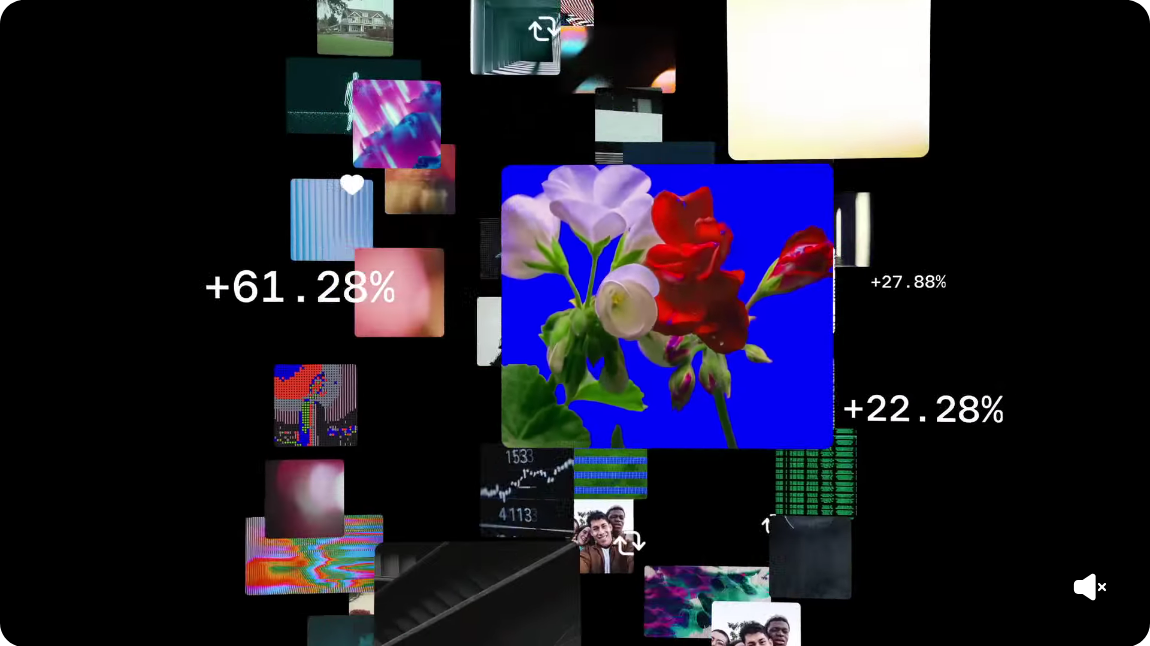
<p><img src="https://ohdearcrypto.github.io/20kyrsgroove//images/base/squares.png" alt="Lots of squares with images and numbers" style="display: block; margin: auto;" /></p>

<p>Then it gets interesting. It is getting interesting.</p>

<h3 id="what-if-the-next-internet-was-built-and-owned-by-us">What if the next internet was built and owned by us?</h3>

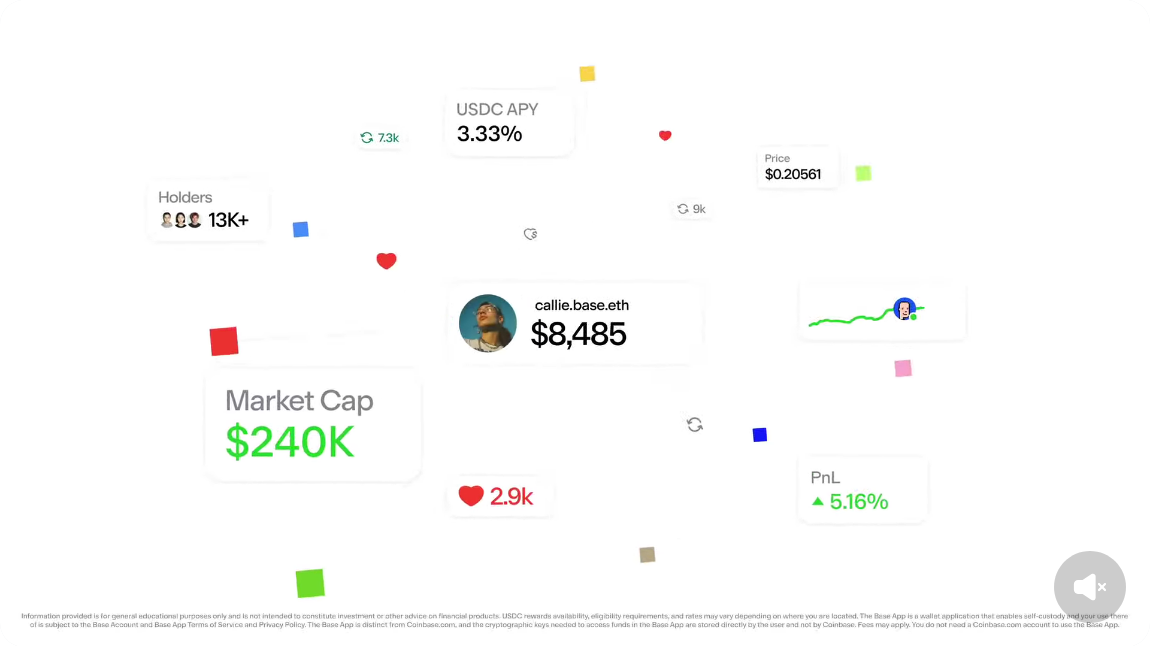
<p><img src="https://ohdearcrypto.github.io/20kyrsgroove//images/base/money.png" alt="Money, people in a graph" style="display: block; margin: auto;" /></p>

<p>Coinbase? Scary.</p>

<h3 id="what-if-you-made-the-next-move">What if you made the next move?</h3>

<p><img src="https://ohdearcrypto.github.io/20kyrsgroove//images/base/you.png" alt="Young man and the word YOU" style="display: block; margin: auto;" /></p>

<p>I’m trying.</p>

<p><img src="https://ohdearcrypto.github.io/20kyrsgroove//images/base/you2.png" alt="Young woman and the word YOU" style="display: block; margin: auto;" /></p>

<h3 id="a-new-way-to-make-it-base">A new way to make it. <a href="https://join.base.app">Base</a>.</h3>

<p><img src="https://ohdearcrypto.github.io/20kyrsgroove//images/base/base.png" alt="Base logo on white background" style="display: block; margin: auto;" /></p>]]></content><author><name>hullboy73</name></author><summary type="html"><![CDATA[What if anyone could make it? What if?… Not just the lucky few who already have an edge but everyone I guess it wouldn’t be called ‘making it’ any more. It would be a given option for people. The creators, the builders, the fans What if every viral post, every remix, every share actually paid you? People would share and post like crazy. What if that one crazy idea became the thing that made millions? Then everyone could make millions. What if every product fit together letting anyone build on what came before? Then it gets interesting. It is getting interesting. What if the next internet was built and owned by us? Coinbase? Scary. What if you made the next move? I’m trying. A new way to make it. Base.]]></summary></entry><entry><title type="html">The Beginner’s Guide to NFTs (Non-Fungible Tokens)</title><link href="https://ohdearcrypto.github.io/20kyrsgroove//20kyrsgroove/the-beginners-guide-to-nfts-(non-fungible-tokens)/" rel="alternate" type="text/html" title="The Beginner’s Guide to NFTs (Non-Fungible Tokens)" /><published>2020-11-06T00:00:00+00:00</published><updated>2020-11-06T00:00:00+00:00</updated><id>https://ohdearcrypto.github.io/20kyrsgroove//20kyrsgroove/the-beginners-guide-to-nfts-(non-fungible-tokens)</id><content type="html" xml:base="https://ohdearcrypto.github.io/20kyrsgroove//20kyrsgroove/the-beginners-guide-to-nfts-(non-fungible-tokens)/"><![CDATA[<h3 id="so-what-are-nfts">So what are NFTs?</h3>

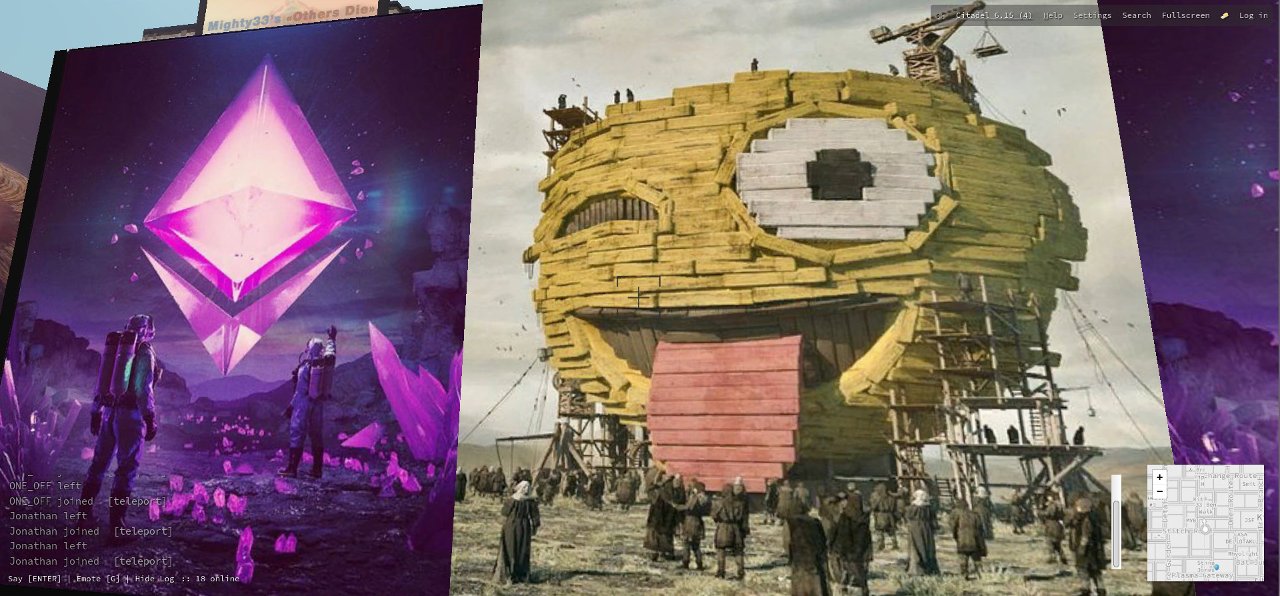
<p><img src="https://ohdearcrypto.github.io/20kyrsgroove//images/cryptovoxels3.jpg" alt="Browsing on Cryptovoxels" style="display: block; margin: auto;" /></p>

<h3 id="lets-start-with-bitcoin">Let’s start with Bitcoin…</h3>
<p>Non-fungible tokens differ from cryptocurrencies (think Bitcoin) in a number of ways. Most explanations start with an understanding of the word ‘fungible’. Bitcoin or fiat currency (money; not backed by gold) is fungible. These assets are mutually interchangeable which means one coin is essentially much like any other. The amount of that currency is essentially all that matters. It doesn’t matter which particular crypto, coin or note you have as long as they equate in economic value.</p>

<h3 id="and-move-to-ethereum">…and move to Ethereum</h3>
<p><a href="https://eips.ethereum.org/EIPS/eip-20">ERC-20</a> is an Ethereum protocol for things that work like money. ETH tokens are interchangeable (fungible). <a href="https://eips.ethereum.org/EIPS/eip-721">ERC-721</a>, an interface protocol published in September 2017, is for non-fungible tokens. It’s the most widely used protocol for Non-Fungible Tokens (though not the only one). NFTs… finally!</p>

<p>The important point here that differentiates NFTs from money-like cryptocurrencies is that each NFT has a unique token ID. Non-Fungible Tokens are unique and this uniqueness is the main difference between NFTs and cryptocurrencies (which are mutually interchangeable).</p>

<blockquote>
  <p>ERC-20 tokens are fungible. This is the «money-like» standard.<br />
ERC-721 tokens are non-fungible. This is the «things-like» standard.<br />
[source: <a href="https://en.bitcoinwiki.org/wiki/ERC-721">Bitcoin Wiki</a>]</p>
</blockquote>

<h3 id="some-nft-history">Some NFT History</h3>
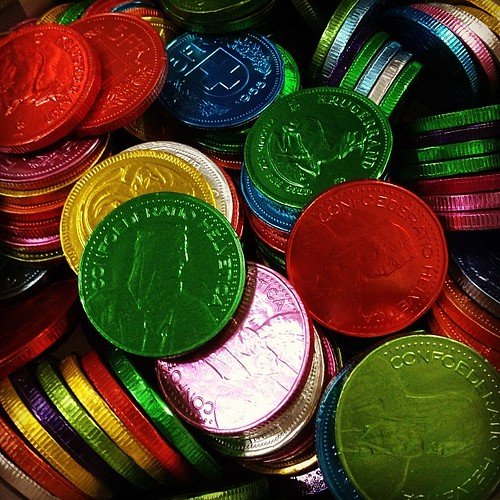
<p><img src="https://ohdearcrypto.github.io/20kyrsgroove//images/colored_coins.jpeg" alt="Some coloured coins" style="display: block; margin: auto;" /></p>

<p>Before the ERC-721 standard was introduced, there were other NFT protocols. In 2013 <a href="http://bitpaper.info/serve/AMIfv94V0F8kxt1ACXga9Tc1V0jm-u-Jf2evCmcHWsZJmYSBG6JB5qA5E3J5eNToOSfOFs7LKfC6X8Y-_nUQR-C-qQC10aruJIVDG0ueU_qdZ4yG5l_VftKoBXs1xzpZHgCTx23tErQ1glKv0XrDC07gvNNINlM-QV1pWzdqhCM1MtubSUA7fyg.pdf">a paper</a> was written (with Vitalik Buterin among its authors) regarding so-called colored coins running on Bitcoin. This was an attempt at tracking a subset of Bitcoins on the network. The paper reads…</p>

<blockquote>
  <p>“they can open the way for the decentralized exchange of things that are not possible by traditional methods.”</p>
</blockquote>

<p>Tracking coloured coins didn’t really work but the above quote suggests the NFT project in a nutshell.</p>

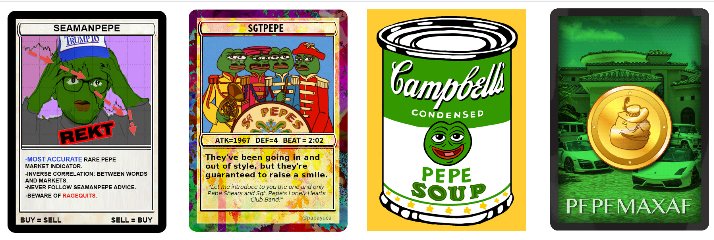
<p><a href="https://counterparty.io/">Counterparty</a> was a protocol that wrote code in the Bitcoin margins. It worked. <a href="https://spellsofgenesis.com/">Spells of Genesis</a> was the first trading card game to run on Counterparty. It also introduced in-game assets to the blockchain. Regular trading-card game <a href="http://www.fowtcg.com/">Force of Will</a> joined Spells of Genesis on the Counterparty blockchain in August 2016. The <a href="https://rare-pepe.com/">Rare Pepe</a> meme began circulating on Counterparty and the market for these memes (as unique digital assets) surged.</p>

<p><img src="https://ohdearcrypto.github.io/20kyrsgroove//images/rare_pepes_1.jpg" alt="Rare Pepes memes" style="display: block; margin: auto;" /></p>

<p><a href="https://www.larvalabs.com/cryptopunks">CryptoPunks</a> was next, written in and out of the margins of the ERC-20 Ethereum standard. The release of the ERC-721 protocol for trading unique, non-fungible tokens followed. ERC-721 works by tracking the history of transactions, thus verifying the uniqueness of each token. <a href="https://www.cryptokitties.co/">CryptoKitties</a> was wildly successful on ERC-721, thereby bringing NFTs to popular attention.</p>

<h3 id="cryptokitties">CryptoKitties</h3>
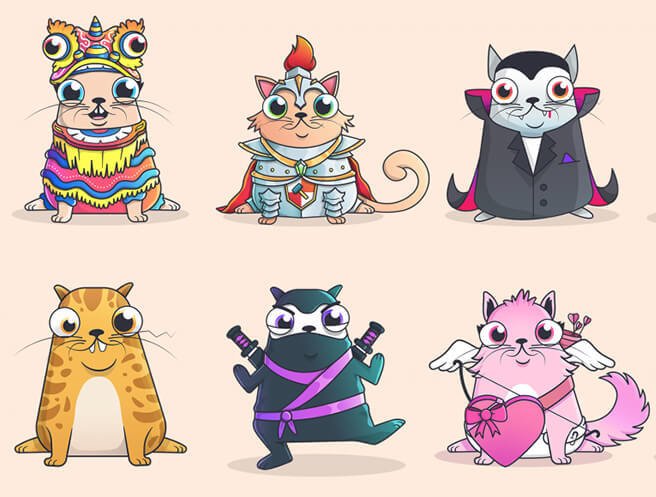
<p><img src="https://ohdearcrypto.github.io/20kyrsgroove//images/cryptokitties2.jpeg" alt="CryptoKitties" style="display: block; margin: auto;" /></p>

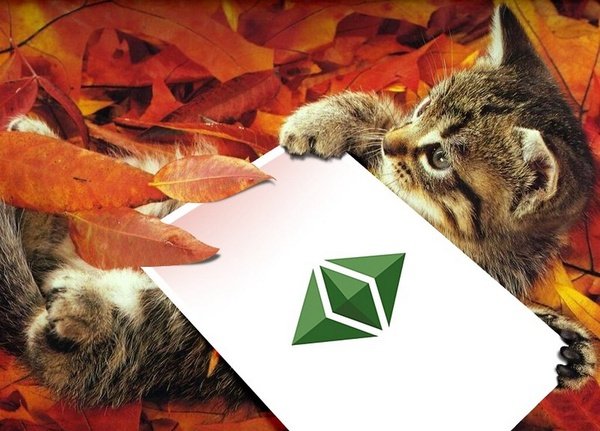
<p><a href="https://www.cryptokitties.co/">CryptoKitties</a> is a game where you breed digital cats. Each cat brings a unique set of traits into the gene pool, if you like, and the aim of the game is to breed unique cats with a fabulous pedigree and (most probably) sell them. While it’s pretty limited in terms of game-play it fits very well with the NFT protocol, the coding of ‘genetic’ traits emphasising individual differences and generating a (cat’s) uniqueness, thus pretty nicely suited to the NFT format. A downside of the craze for CryptoKitties was the pressure it placed on the Ethereum blockchain and the corresponding increase in Ethereum gas fees.</p>

<p><img src="https://ohdearcrypto.github.io/20kyrsgroove//images/cryptokitties3.jpeg" alt="A cat plays with an Ethereum trading card" style="display: block; margin: auto;" /></p>

<h3 id="trading-of-nfts">Trading of NFTs</h3>
<p>We’ve seen here some early examples of the most common forms of digital assets that are still traded today. The Rare Pepe memes and CryptoPunks could be classified as digital collectibles or digital art while digital trading cards and CryptoKitties are early examples of blockchain gaming. In the first half of 2020, gaming and collectibles made up <a href="https://nonfungible.com/blog/nonfungible-first-semester-2020-segmented-performance-analysis">70% of NFT transactions by number</a>. Digital art and virtual real estate have seen exceptional growth in recent times, together accounting for <a href="https://nonfungible.com/blog/nonfungible-first-semester-2020-segmented-performance-analysis">70% of transactions by market volume (in USD)</a> for the same period.</p>

<h3 id="virtual-worlds">Virtual Worlds</h3>
<p><img src="https://ohdearcrypto.github.io/20kyrsgroove//images/decentraland_1.jpg" alt="Flying cars in Decentraland" style="display: block; margin: auto;" /></p>

<p><img src="https://ohdearcrypto.github.io/20kyrsgroove//images/decentraland_2.jpg" alt="Swimming pool in Decentraland" style="display: block; margin: auto;" /></p>

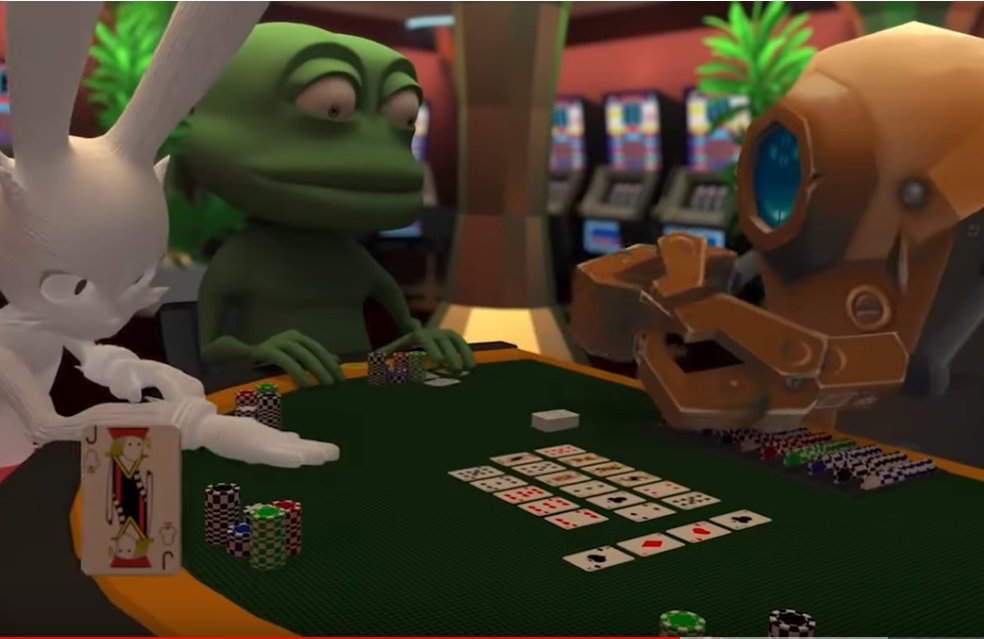
<p><a href="https://decentraland.org/">Decentraland</a> is a virtual reality world. It raised $26 million with its <a href="https://www.coindesk.com/26-million-blockchain-vr-project-decentraland-raises-new-funding-in-ico">ICO in 2017</a> and went live earlier this year. MANA is an ERC20 crypto token which is used to purchase LAND parcels in Decentraland. Once you have some LAND you can earn MANA by renting out space and charging for entry to events. <a href="https://www.cryptovoxels.com/">Cryptovoxels</a> is a VR world where users often exhibit and sell digital art on the blockchain in virtual galleries. <a href="https://www.sandbox.game/en/">The Sandbox</a>, <a href="https://mcp3d.com/">MegaCryptoPolis</a> and <a href="https://somniumspace.com/">Somnium Space</a> are other VR worlds for which you can buy space on the blockchain if you have the crypto, but parcels of VR land don’t come cheap!</p>

<h3 id="marketplaces">Marketplaces</h3>
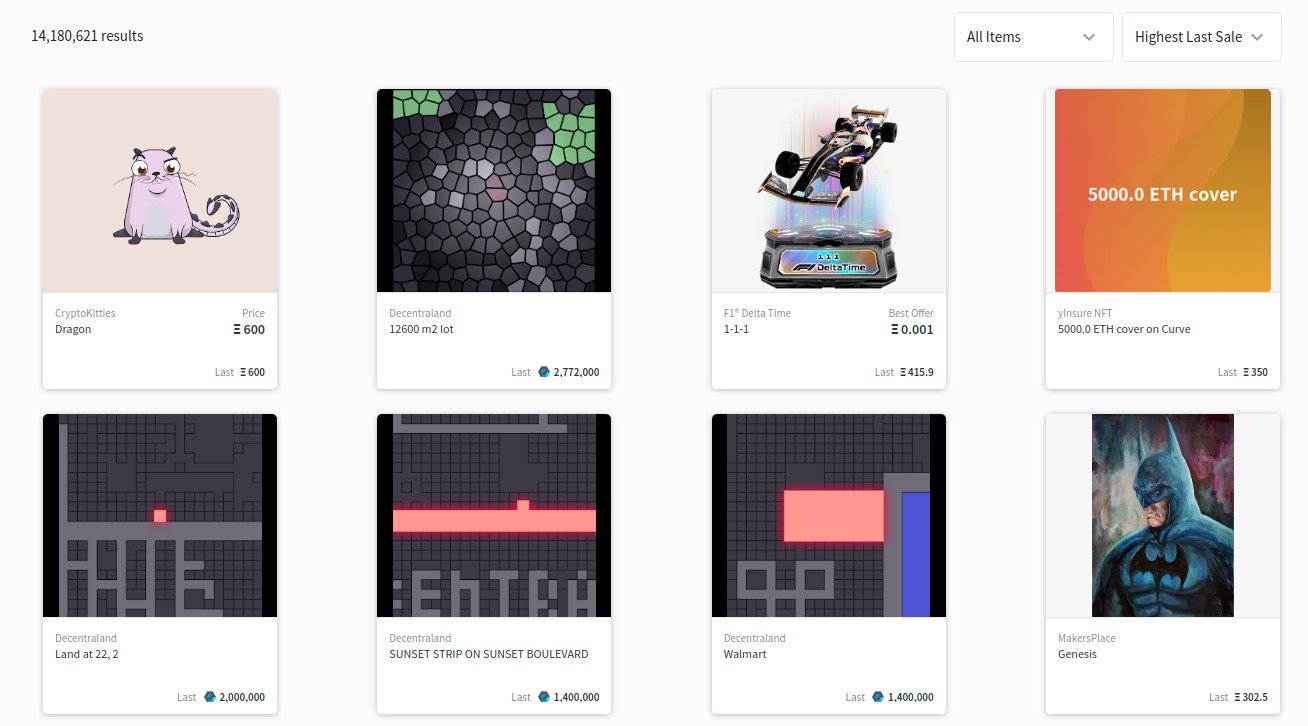
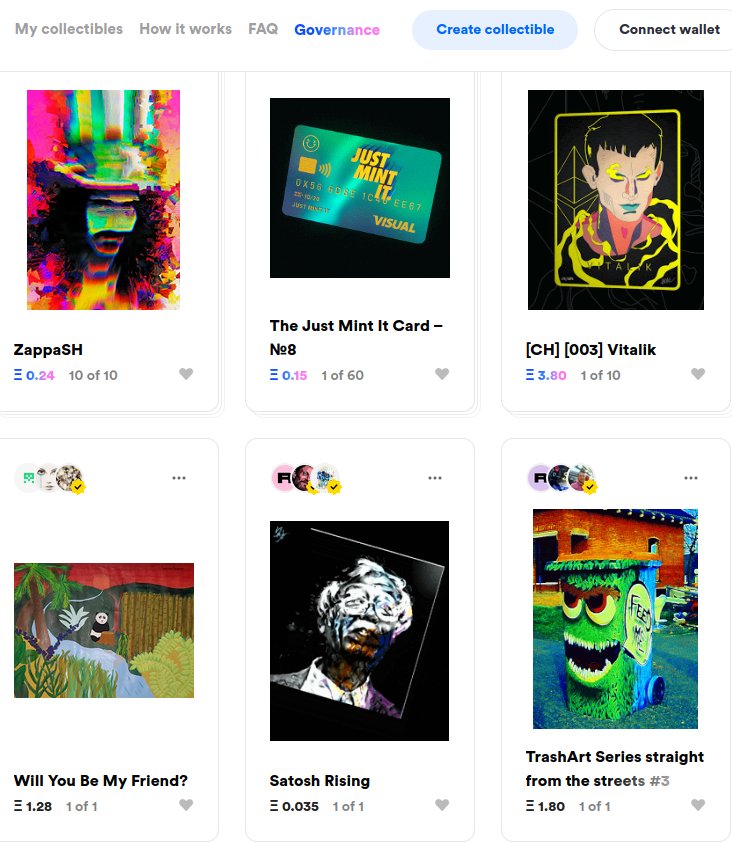
<p><a href="https://opensea.io/">OpenSea</a> prides itself as being ‘the largest marketplace for rare items’ and is a good place to develop your knowledge of NFT trade. It’s a well presented website with clear, detailed and extensive <a href="https://opensea.io/faq">documentation</a>. Bestsellers are trading cards, digital collectibles and in-game assets (avatars, potions, level-ups etc) but you can also purchase virtual reality land, domain names and numerous other kinds of NFTs here. To buy and sell on OpenSea you need an Ethereum wallet (such as <a href="https://metamask.io/">MetaMask</a> or similar).</p>

<p><img src="https://ohdearcrypto.github.io/20kyrsgroove//images/open_sea_highest_price_trades.jpg" alt="Highest price trades on Open Sea.io" style="display: block; margin: auto;" /></p>

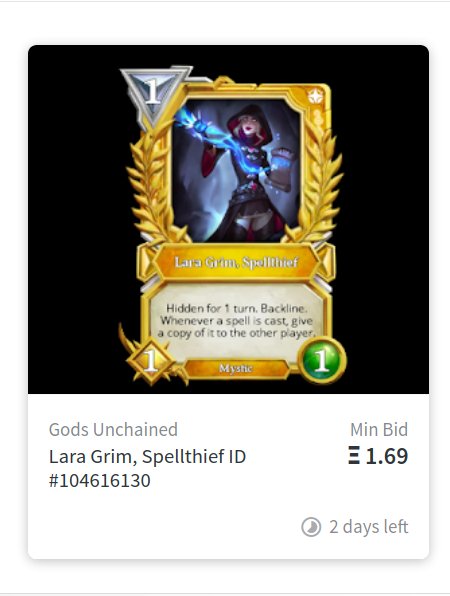
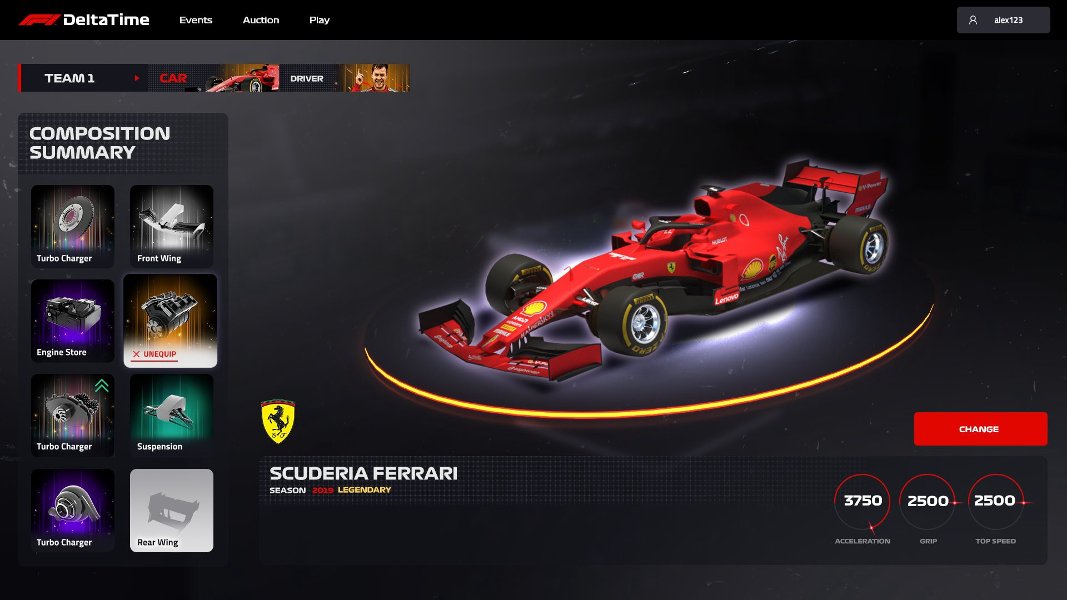
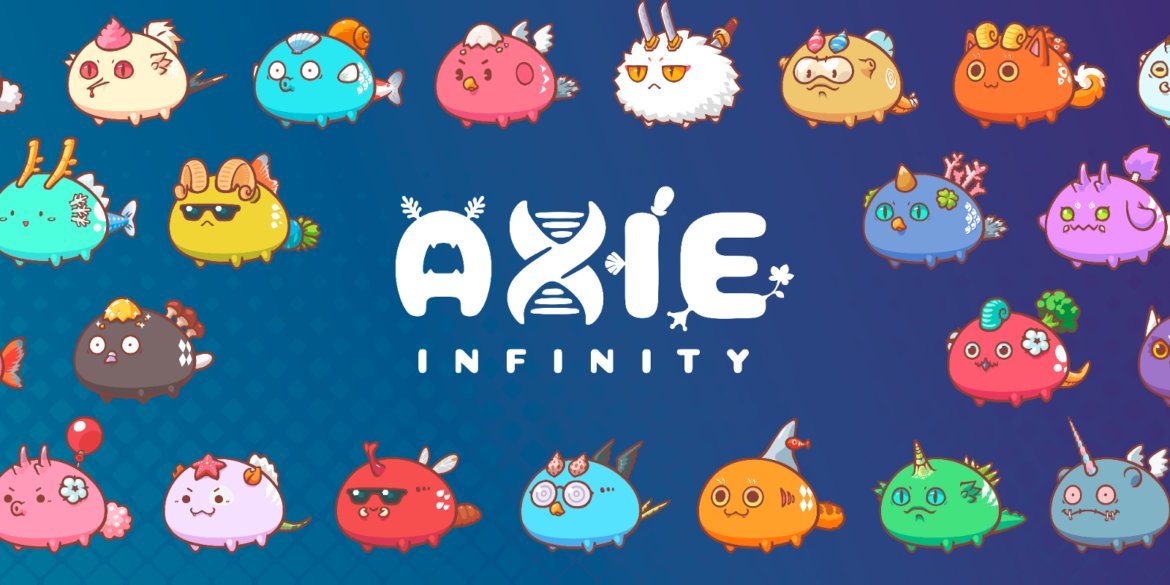
<p><a href="https://axieinfinity.com/">Axie Infinity</a> is a hugely popular game which has ‘adopted’ the breeding concept from CryptoKitties and introduces some fighting alongside. <a href="https://godsunchained.com/">Gods Unchained</a> and <a href="https://en.cryptospells.jp/">Crypto Spells</a> are popular blockchain trading card games that retail on <a href="https://opensea.io/">OpenSea</a>. <a href="https://www.mycryptoheroes.net/">My Crypto Heroes</a> is a virtual role-playing game from Japan that has been hugely popular in the Far East. Sports collectibles have taken off with <a href="https://sorare.com/">Sorare</a> (fantasy football), <a href="https://www.f1deltatime.com/">F1 Delta Time</a> (Formula One) and <a href="https://www.mlbcryptobaseball.com/">MLB Champions</a> (baseball).</p>

<p><img src="https://ohdearcrypto.github.io/20kyrsgroove//images/axies_1.jpg" alt="Axie Infinity" style="display: block; margin: auto;" /></p>

<p><img src="https://ohdearcrypto.github.io/20kyrsgroove//images/gods_unchained_2.jpg" alt="Gods Unchained trading card" style="display: block; margin: auto;" /></p>

<p><img src="https://ohdearcrypto.github.io/20kyrsgroove//images/f1deltatime.jpg" alt="Scudera Ferrari racing car on F1 DeltaTime" style="display: block; margin: auto;" /></p>

<h3 id="digital-art">Digital Art</h3>
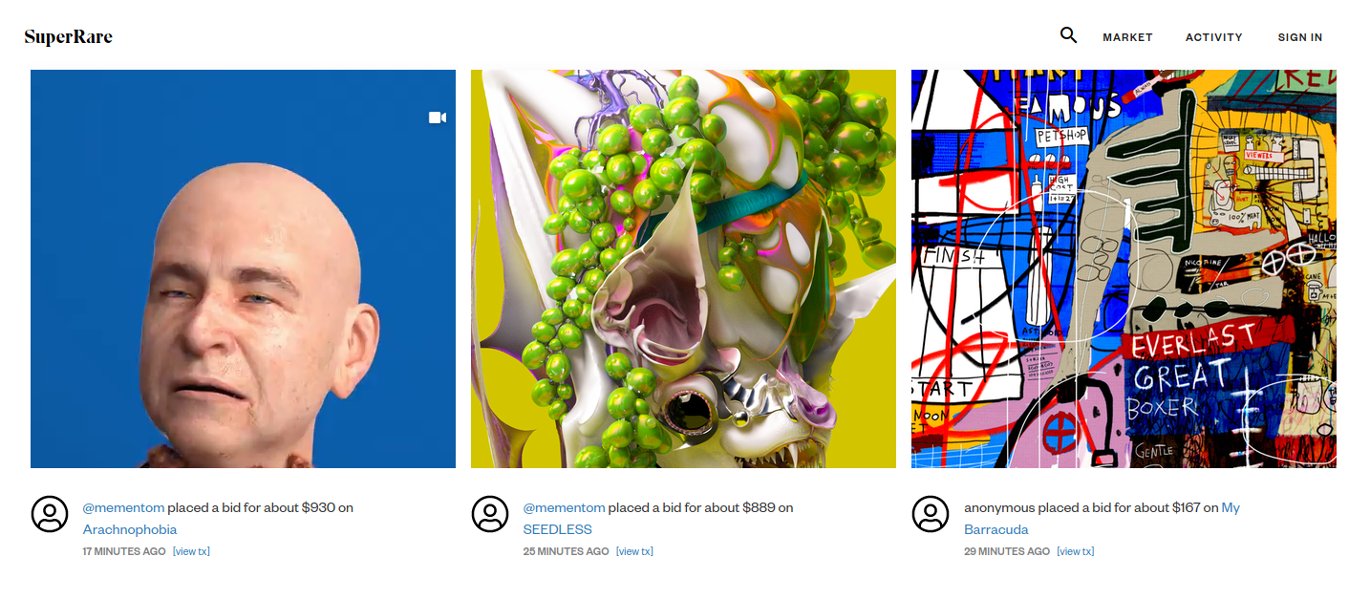
<p><a href="https://rarible.com/">Rarible</a> and <a href="https://superrare.co/">SuperRare</a> are important sites for trade of digital art and are already focusing on different customer bases. SuperRare appears to have established itself as the top-end showroom where digital art commands the highest prices. Rarible is more of a make your own and join in exchange, billed as the “community-owned NFT marketplace”. Creating your own digital art or collectible and selling (or storing) it on the blockchain, a process known as ‘minting’, is possible on marketplaces such as <a href="https://app.rarible.com/create/">Rarible</a> and <a href="https://opensea.io/blog/developers/how-to-create-your-own-marketplace-on-opensea-in-three-minutes-or-less/">OpenSea</a>. Why not create your own range of collectibles?</p>

<p><img src="https://ohdearcrypto.github.io/20kyrsgroove//images/super_rare_1.jpg" alt="SuperRare marketplace" style="display: block; margin: auto;" /></p>

<p>The NFT protocol may have much to offer the art world in terms of tracking the provenance of physical artworks. Christies recently <a href="https://fintechnews.ch/blockchain_bitcoin/christies-first-auction-of-blockchain-related-artwork-sold-for-more-than-us130000/39757/?">sold a blockchain-related artwork (including an NFT) for $130,000</a>. Digital art is more commonly traded on the blockchain. Owners can house and showcase collections of digital art in virtual reality art galleries which you can have a look around on sites such as <a href="https://www.cryptovoxels.com/">Cryptovoxels</a>. <a href="https://async.art/">Async Art</a> is a leading company in what it calls ‘programmable art,’ ostensibly where owners have cryptographic access to the code to affect aspects of the art’s presentation.</p>

<p><img src="https://ohdearcrypto.github.io/20kyrsgroove//images/rarible1.jpg" alt="Rarible marketplace" style="display: block; margin: auto;" /></p>

<h3 id="beyond">Beyond…</h3>
<p>2020 has seen growth and expansion in the NFT market after a slightly muted 2019. Real world assets are increasingly being represented by non-fungible tokens. In 2017 a <a href="https://www.newscientist.com/article/mg23631474-500-a-house-has-been-bought-on-the-blockchain-for-the-first-time/">$60,000 flat in Kiev was sold on the blockchain</a> while <a href="https://www.nytimes.com/2018/05/25/realestate/a-blockchain-building-in-bushwick.html">properties have been tokenised in New York</a> (the non-fungible tokens here representing shares in a building).</p>

<p>With the release of the <a href="https://eips.ethereum.org/EIPS/eip-1155">ERC-1155 Multi-Token Standard protocol</a> in 2019, enabling the pooling of non-fungible (ERC-721) and fungible (ERC-20) assets, fractional tokenisation is now a possibility, potentially enabling people to own shares in assets. NFTs can provide proof of ownership, provenance and authenticy, concepts that are of crucial importance to many blockchain-based projects focused upon digital identity and data ownership.</p>

<p>Perhaps the awkward appellation ‘Non-Fungible Tokens’ won’t last but this is an exciting and fast-developing sector of blockchain technology for crypto traders, artists and developers alike.</p>

<p><img src="https://ohdearcrypto.github.io/20kyrsgroove//images/decentraland_4.jpg" alt="A frog, rabbit and robot gambling at a casino in Decentraland" style="display: block; margin: auto;" /></p>

<h3 id="links">Links</h3>
<p>These are some really good reads I’d suggest if you want to explore the worlds of NFTs some more.</p>

<p><a href="https://opensea.io/blog/guides/non-fungible-tokens/">The Non-Fungible Token Bible</a><br />
Published by OpenSea in January 2020, this is the go-to reading on the subject. It provides a detailed explanation of the workings of the ERC-721 protocol with an extensive history on the development of NFTs.</p>

<p><a href="https://cointelegraph.com/magazine/nonfungible-tokens/#/">Nonfungible Tokens: The Quick Guide</a><br />
Coin Telegraph’s streamlined, accurate and incisive introduction to NFTs and developments in the market. Rated.</p>

<p><a href="https://academy.binance.com/en/articles/a-guide-to-crypto-collectibles-and-non-fungible-tokens-nfts">A Guide to Crypto Collectibles and Non-fungible Tokens (NFTs)</a><br />
Binance’s guide is a little dry in places but it explains NFTs from the ground up, starting with non-fungibility and moving on to decentralized applications and popular projects using NFTs. It’s carefully explained.</p>

<p><a href="https://www.nichanank.com/blog/2020/4/12/into-the-metaverse">Into The Metaverse: Non-Fungible Tokens in 2020</a><br />
A readable article on NFTs with an emphasis on digital art and virtual reality.</p>

<p><a href="https://decentraland.org/blog/technology/what-are-nfts/">What are NFTs?</a><br />
Decentraland’s sensible guide to making sense of it all.</p>

<p><a href="https://medium.com/@Andrew.Steinwold/the-history-of-non-fungible-tokens-nfts-f362ca57ae10">The History of Non-Fungible Tokens (NFTs)</a><br />
Andrew Steinwold’s <a href="https://medium.com/@Andrew.Steinwold">blog</a> has many interesting articles on NFTs. I found this article really helpful on understanding the development of NFT applications and protocols.</p>

<p><a href="https://bankless.substack.com/p/into-the-metaverse">Into the Metaverse</a><br />
Andrew Steinwold again, this time exploring the possibilities of VR and the blockchain.</p>

<p><a href="https://hackernoon.com/what-can-be-tokenized-the-tokenization-of-everything-mw1ay3bk7">What Can Be Tokenised? The Tokenisation of Everything</a><br />
This article from August 2019 doesn’t mention NFTs but its remit of the potential of real-world assets tokenised on the blockchain has much of relevance to the NFT sector.</p>

<p><a href="https://docs.opensea.io/">OpenSea Docs</a><br />
OpenSea has ‘built a set of robust marketplace tools’ and they’ve made them openly available for developers. Could this be your next exciting venture?</p>

<p><a href="https://www.coingecko.com/buzz/a-brief-guide-to-trading-collectibles-on-opensea">A Brief Guide to Trading Collectibles on OpenSea</a><br />
A clear guide to how to buy and sell collectibles on OpenSea. You’ll need an ETH wallet.</p>

<p><a href="https://blockonomi.com/nfts-collecting-creating-guide/">Complete Guide to NFTs: How to Create &amp; Collect the Next Wave of Digital Assets</a><br />
Likeable, short guide to the field; good on other examples of tokenisation.</p>

<p><a href="https://education.district0x.io/general-topics/understanding-ethereum/erc-721-tokens/">ERC721 Tokens (Non-Fungible Tokens) Explained</a><br />
Clarity on the ERC-721 standard protocol.</p>

<p><a href="https://academy.ivanontech.com/blog/what-is-rarible-the-ultimate-guide-to-rarible-and-rari">What is Rarible - The Ultimate Guide to Rarible and RARI</a><br />
A detailed guide to the Rarible marketplace and RARI token</p>

<p><a href="https://cryptonews.com/news/top-10-nfts-by-all-time-trading-volume-7018.htm">Top NFTs by All-Time Trading Volume</a><br />
The most successful NFT games and projects by all-time trading volume.</p>

<p><a href="https://cointelegraph.com/news/five-of-the-most-expensive-nfts-sold-in-2019">Five of the Most Expensive NFTs Sold in 2019</a><br />
Specific one-off crypto-gaming sales from 2019.</p>

<p><a href="https://bankless.substack.com/p/how-to-make-money-in-crypto-gaming">How to make money in crypto gaming</a><br />
Axie Infinity is the current market leader in crypto gaming. Ryan Sean Adams of Bankless gives you some good tips.</p>

<p><a href="https://decrypt.co/42958/delphi-digital-buys-five-ethereum-nfts-for-162000">Delphi Digital Buys Five Ethereum NFTs for $162,000</a><br />
This pretty extraordinary investment is worth reading about.</p>

<p><a href="https://breakermag.com/how-cryptopunks-creators-charmed-the-art-world-and-paved-the-way-for-blockchain-art/">How CryptoPunks’ Creators Charmed the Art World and Paved the Way for Blockchain Art</a></p>

<p><a href="https://www.vice.com/en/article/ev57p4/i-went-to-the-first-live-auction-for-rare-pepes-on-the-blockchain">I Went to the First Live Auction for Rare Pepes on the Blockchain</a></p>

<p><a href="https://www.dailydot.com/unclick/rare-pepe-frog-meme-economy/">The Rare Pepe economy is real, and there’s serious money behind it</a></p>

<p><a href="https://medium.com/@makzent/the-my-crypto-heroes-playbook-episode-1-game-ecosystem-design-7e81d65b4564">The My Crypto Heroes Playbook — Episode 1: Game Ecosystem Design</a><br />
A series of articles on the behind-the-scenes development of My Crypto Heroes, one of the most played blockchain games in the world.</p>

<p><a href="https://medium.com/wax-io/how-to-launch-an-nft-sale-on-wax-a-complete-guide-19944b3db67f">How to launch an NFT Sale on WAX: A Complete Guide</a><br />
ERC-721 is not the only protocol for NFTs. WAX is one of the alternatives.</p>

<p><a href="https://nonfungible.com/blog/most-profitable-cryptoart-on-superrare">Which are the most profitable cryptoart on SuperRare?</a><br />
The most successful art investments and turnovers on SuperRare as calculated from the accessible blockchain ledger.</p>

<p><a href="https://artsdefi.substack.com/">DeFi Arts Intelligencer</a><br />
Detailed weekly guide to ‘key happenings around Ethereum art, collectibles, games, finance, and more.’</p>

<p><a href="https://beta.cent.co/WhaleShark/">WhaleShark’s blog on Cent</a><br />
Reknowned collector and investor in digital art’s interesting blog and discursive comment on Cent.</p>

<p>And on <a href="https://www.publish0x.com?a=YQdJ6G1JdO">Publish0x</a>:</p>

<p><a href="https://www.publish0x.com/mind-puzzle/i-got-hypnotized-by-the-amazing-nfts-world-xpjoxom">I got hypnotized by the amazing NFTs world</a> by PVMihalache</p>

<p><a href="https://www.publish0x.com/cryptomarketeer-blog/from-cypherpunks-to-cryptopunks-blockchain-collectibles-and-xjjzmzj">From Cypherpunks to CryptoPunks: Blockchain Collectibles and NFTs</a> by CryptoMarketeer</p>

<p><a href="https://www.publish0x.com/around-crypto/nfts-will-change-art-market-forever-best-marketplaces-to-ent-xejwkjm">NFTs will change art market forever: Best marketplaces to enter the revolution</a> by martin canadese</p>

<p><a href="https://www.publish0x.com/hobbyist-crypto/nfts-the-new-collectibles-giveaway-included-xkklrgj">NFTs the new collectibles (Giveaway included)</a> by Mynima</p>

<p><a href="https://www.publish0x.com/mind-puzzle/how-to-manage-nfts-with-the-metamask-mobile-app-xoleeod">How to manage NFTs with the MetaMask mobile app</a> by PVMihalache</p>

<p><a href="https://www.publish0x.com/blockchain-cryptocurrencies-and-collectibles/beginners-guide-to-the-sandbox-xxokxkv">Beginner’s Guide to The Sandbox</a> by CryptoWordsmith</p>

<p>Hope you enjoyed this article. Thank you for reading.</p>]]></content><author><name>hullboy73</name></author><summary type="html"><![CDATA[So what are NFTs? Let’s start with Bitcoin… Non-fungible tokens differ from cryptocurrencies (think Bitcoin) in a number of ways. Most explanations start with an understanding of the word ‘fungible’. Bitcoin or fiat currency (money; not backed by gold) is fungible. These assets are mutually interchangeable which means one coin is essentially much like any other. The amount of that currency is essentially all that matters. It doesn’t matter which particular crypto, coin or note you have as long as they equate in economic value. …and move to Ethereum ERC-20 is an Ethereum protocol for things that work like money. ETH tokens are interchangeable (fungible). ERC-721, an interface protocol published in September 2017, is for non-fungible tokens. It’s the most widely used protocol for Non-Fungible Tokens (though not the only one). NFTs… finally! The important point here that differentiates NFTs from money-like cryptocurrencies is that each NFT has a unique token ID. Non-Fungible Tokens are unique and this uniqueness is the main difference between NFTs and cryptocurrencies (which are mutually interchangeable). ERC-20 tokens are fungible. This is the «money-like» standard. ERC-721 tokens are non-fungible. This is the «things-like» standard. [source: Bitcoin Wiki] Some NFT History Before the ERC-721 standard was introduced, there were other NFT protocols. In 2013 a paper was written (with Vitalik Buterin among its authors) regarding so-called colored coins running on Bitcoin. This was an attempt at tracking a subset of Bitcoins on the network. The paper reads… “they can open the way for the decentralized exchange of things that are not possible by traditional methods.” Tracking coloured coins didn’t really work but the above quote suggests the NFT project in a nutshell. Counterparty was a protocol that wrote code in the Bitcoin margins. It worked. Spells of Genesis was the first trading card game to run on Counterparty. It also introduced in-game assets to the blockchain. Regular trading-card game Force of Will joined Spells of Genesis on the Counterparty blockchain in August 2016. The Rare Pepe meme began circulating on Counterparty and the market for these memes (as unique digital assets) surged. CryptoPunks was next, written in and out of the margins of the ERC-20 Ethereum standard. The release of the ERC-721 protocol for trading unique, non-fungible tokens followed. ERC-721 works by tracking the history of transactions, thus verifying the uniqueness of each token. CryptoKitties was wildly successful on ERC-721, thereby bringing NFTs to popular attention. CryptoKitties CryptoKitties is a game where you breed digital cats. Each cat brings a unique set of traits into the gene pool, if you like, and the aim of the game is to breed unique cats with a fabulous pedigree and (most probably) sell them. While it’s pretty limited in terms of game-play it fits very well with the NFT protocol, the coding of ‘genetic’ traits emphasising individual differences and generating a (cat’s) uniqueness, thus pretty nicely suited to the NFT format. A downside of the craze for CryptoKitties was the pressure it placed on the Ethereum blockchain and the corresponding increase in Ethereum gas fees. Trading of NFTs We’ve seen here some early examples of the most common forms of digital assets that are still traded today. The Rare Pepe memes and CryptoPunks could be classified as digital collectibles or digital art while digital trading cards and CryptoKitties are early examples of blockchain gaming. In the first half of 2020, gaming and collectibles made up 70% of NFT transactions by number. Digital art and virtual real estate have seen exceptional growth in recent times, together accounting for 70% of transactions by market volume (in USD) for the same period. Virtual Worlds Decentraland is a virtual reality world. It raised $26 million with its ICO in 2017 and went live earlier this year. MANA is an ERC20 crypto token which is used to purchase LAND parcels in Decentraland. Once you have some LAND you can earn MANA by renting out space and charging for entry to events. Cryptovoxels is a VR world where users often exhibit and sell digital art on the blockchain in virtual galleries. The Sandbox, MegaCryptoPolis and Somnium Space are other VR worlds for which you can buy space on the blockchain if you have the crypto, but parcels of VR land don’t come cheap! Marketplaces OpenSea prides itself as being ‘the largest marketplace for rare items’ and is a good place to develop your knowledge of NFT trade. It’s a well presented website with clear, detailed and extensive documentation. Bestsellers are trading cards, digital collectibles and in-game assets (avatars, potions, level-ups etc) but you can also purchase virtual reality land, domain names and numerous other kinds of NFTs here. To buy and sell on OpenSea you need an Ethereum wallet (such as MetaMask or similar). Axie Infinity is a hugely popular game which has ‘adopted’ the breeding concept from CryptoKitties and introduces some fighting alongside. Gods Unchained and Crypto Spells are popular blockchain trading card games that retail on OpenSea. My Crypto Heroes is a virtual role-playing game from Japan that has been hugely popular in the Far East. Sports collectibles have taken off with Sorare (fantasy football), F1 Delta Time (Formula One) and MLB Champions (baseball). Digital Art Rarible and SuperRare are important sites for trade of digital art and are already focusing on different customer bases. SuperRare appears to have established itself as the top-end showroom where digital art commands the highest prices. Rarible is more of a make your own and join in exchange, billed as the “community-owned NFT marketplace”. Creating your own digital art or collectible and selling (or storing) it on the blockchain, a process known as ‘minting’, is possible on marketplaces such as Rarible and OpenSea. Why not create your own range of collectibles? The NFT protocol may have much to offer the art world in terms of tracking the provenance of physical artworks. Christies recently sold a blockchain-related artwork (including an NFT) for $130,000. Digital art is more commonly traded on the blockchain. Owners can house and showcase collections of digital art in virtual reality art galleries which you can have a look around on sites such as Cryptovoxels. Async Art is a leading company in what it calls ‘programmable art,’ ostensibly where owners have cryptographic access to the code to affect aspects of the art’s presentation. Beyond… 2020 has seen growth and expansion in the NFT market after a slightly muted 2019. Real world assets are increasingly being represented by non-fungible tokens. In 2017 a $60,000 flat in Kiev was sold on the blockchain while properties have been tokenised in New York (the non-fungible tokens here representing shares in a building). With the release of the ERC-1155 Multi-Token Standard protocol in 2019, enabling the pooling of non-fungible (ERC-721) and fungible (ERC-20) assets, fractional tokenisation is now a possibility, potentially enabling people to own shares in assets. NFTs can provide proof of ownership, provenance and authenticy, concepts that are of crucial importance to many blockchain-based projects focused upon digital identity and data ownership. Perhaps the awkward appellation ‘Non-Fungible Tokens’ won’t last but this is an exciting and fast-developing sector of blockchain technology for crypto traders, artists and developers alike. Links These are some really good reads I’d suggest if you want to explore the worlds of NFTs some more. The Non-Fungible Token Bible Published by OpenSea in January 2020, this is the go-to reading on the subject. It provides a detailed explanation of the workings of the ERC-721 protocol with an extensive history on the development of NFTs. Nonfungible Tokens: The Quick Guide Coin Telegraph’s streamlined, accurate and incisive introduction to NFTs and developments in the market. Rated. A Guide to Crypto Collectibles and Non-fungible Tokens (NFTs) Binance’s guide is a little dry in places but it explains NFTs from the ground up, starting with non-fungibility and moving on to decentralized applications and popular projects using NFTs. It’s carefully explained. Into The Metaverse: Non-Fungible Tokens in 2020 A readable article on NFTs with an emphasis on digital art and virtual reality. What are NFTs? Decentraland’s sensible guide to making sense of it all. The History of Non-Fungible Tokens (NFTs) Andrew Steinwold’s blog has many interesting articles on NFTs. I found this article really helpful on understanding the development of NFT applications and protocols. Into the Metaverse Andrew Steinwold again, this time exploring the possibilities of VR and the blockchain. What Can Be Tokenised? The Tokenisation of Everything This article from August 2019 doesn’t mention NFTs but its remit of the potential of real-world assets tokenised on the blockchain has much of relevance to the NFT sector. OpenSea Docs OpenSea has ‘built a set of robust marketplace tools’ and they’ve made them openly available for developers. Could this be your next exciting venture? A Brief Guide to Trading Collectibles on OpenSea A clear guide to how to buy and sell collectibles on OpenSea. You’ll need an ETH wallet. Complete Guide to NFTs: How to Create &amp; Collect the Next Wave of Digital Assets Likeable, short guide to the field; good on other examples of tokenisation. ERC721 Tokens (Non-Fungible Tokens) Explained Clarity on the ERC-721 standard protocol. What is Rarible - The Ultimate Guide to Rarible and RARI A detailed guide to the Rarible marketplace and RARI token Top NFTs by All-Time Trading Volume The most successful NFT games and projects by all-time trading volume. Five of the Most Expensive NFTs Sold in 2019 Specific one-off crypto-gaming sales from 2019. How to make money in crypto gaming Axie Infinity is the current market leader in crypto gaming. Ryan Sean Adams of Bankless gives you some good tips. Delphi Digital Buys Five Ethereum NFTs for $162,000 This pretty extraordinary investment is worth reading about. How CryptoPunks’ Creators Charmed the Art World and Paved the Way for Blockchain Art I Went to the First Live Auction for Rare Pepes on the Blockchain The Rare Pepe economy is real, and there’s serious money behind it The My Crypto Heroes Playbook — Episode 1: Game Ecosystem Design A series of articles on the behind-the-scenes development of My Crypto Heroes, one of the most played blockchain games in the world. How to launch an NFT Sale on WAX: A Complete Guide ERC-721 is not the only protocol for NFTs. WAX is one of the alternatives. Which are the most profitable cryptoart on SuperRare? The most successful art investments and turnovers on SuperRare as calculated from the accessible blockchain ledger. DeFi Arts Intelligencer Detailed weekly guide to ‘key happenings around Ethereum art, collectibles, games, finance, and more.’ WhaleShark’s blog on Cent Reknowned collector and investor in digital art’s interesting blog and discursive comment on Cent. And on Publish0x: I got hypnotized by the amazing NFTs world by PVMihalache From Cypherpunks to CryptoPunks: Blockchain Collectibles and NFTs by CryptoMarketeer NFTs will change art market forever: Best marketplaces to enter the revolution by martin canadese NFTs the new collectibles (Giveaway included) by Mynima How to manage NFTs with the MetaMask mobile app by PVMihalache Beginner’s Guide to The Sandbox by CryptoWordsmith Hope you enjoyed this article. Thank you for reading.]]></summary></entry><entry><title type="html">We are the Dollars and Cents</title><link href="https://ohdearcrypto.github.io/20kyrsgroove//20kyrsgroove/we-are-the-dollars-and-cents/" rel="alternate" type="text/html" title="We are the Dollars and Cents" /><published>2020-10-24T00:00:00+00:00</published><updated>2020-10-24T00:00:00+00:00</updated><id>https://ohdearcrypto.github.io/20kyrsgroove//20kyrsgroove/we-are-the-dollars-and-cents</id><content type="html" xml:base="https://ohdearcrypto.github.io/20kyrsgroove//20kyrsgroove/we-are-the-dollars-and-cents/"><![CDATA[<p><img src="https://ohdearcrypto.github.io/20kyrsgroove//images/farm-2852024_640.jpg" alt="Crypto Mining Apparatus" style="display: block; margin: auto;" /></p>

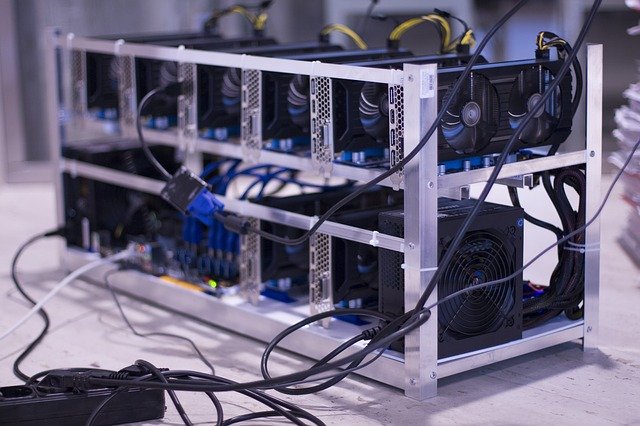
<p>Deadlines can be helpful things. I stayed up deep into the morning to get an article penned for a writing competition of sorts on a website called <a href="https://www.publish0x.com/">Publish0x</a>. If you fancy joining and giving it a go please click this <a href="https://www.publish0x.com?a=YQdJ6G1JdO">affiliate link</a>.</p>

<p>How did I get here? For years I’ve abstained from using advertising on the internet - not littering my websites with Google ads and generally using an Adblocker for my internet travels. Suddenly there’s quite a leap. Overnight I write <a href="https://www.publish0x.com/20-minutes-of-peace-and-quiet/dexg-the-cryptocurrency-seeking-to-curb-volatility-xpjgogw">an article which is basically an advert for some zonkers crypto company in Singapore</a>. I don’t feel very good about this. This is pretty low in the barrel behaviour to be effectively contributing fake news (well… fake opinion) to the internet. The desperation on my part is perhaps less about money and more about wanting to put something out there maybe but…</p>

<p>Looking at it from a more positive angle I think there’s something to be credited about the more typical working practice of Publish0x. The essential concept is that you earn money (Ethereum tokens) for both reading and writing articles on the website. The occupying authorities in internet land (Google, Facebook, Amazon, Apple, Microsoft) continue to return approximately zilch credit or rewards for their users’ ongoing attention. OK, that’s not exactly true. They provide many free services with marvellous facilities for connection over some kind of cabled/mobile infrastructure, but the pressure is mounting on these corporations to give something in credit or even stake back to their users for the powerful leverage provided them by streamed channels of user data.</p>

<p>The services provided by these big tech corporations are underpinned, founded and served on open source technologies. In such ways the fundamentals of the internet remain free and open source. The more people realise the extent and misuse of their personal data and the technological infrastructure of their commons the more vocal the demand for a different kind of internet. <a href="https://www.publish0x.com/">Publish0x</a> is not really that, much as <a href="https://brave.com/">Brave Browser</a> (ads you are rewarded for clicking on) is not, but they are moves in a different direction. They recognise and make some means of addressing the inequitable distribution of internet wealth. They credit you with something (small) for your attention.</p>

<p>I’m pretty much a newbie to the crypto scene but there’s a sense of excitement in the areas of crypto-currency investment and blockchain technologies right now. The two fields are closely interlinked so we see a curious mix of goldrush capitalism (DeFi) and communitarian promise in decentralised, blockchain networks. Projects such as <a href="https://ipfs.io/">IPFS</a>, <a href="https://www.blockstack.org/">Blockstack</a>, <a href="https://telegram.org/">Telegram</a> and <a href="https://threefold.io/">ThreeFold</a> are all worth reading about. They hark back to some long-held, more altruistic hopes for the internet - see <a href="https://freedomboxfoundation.org/">The Internet Needs Freedom</a>.</p>

<p>I seem to have run to the end of my spirited little editorial here. A few other interesting reads of note regarding these technological developments:</p>

<p><a href="https://lex.substack.com/">The Fintech Blueprint</a> - change in the financial sector<br />
<a href="https://www.matthewball.vc/all/audiotech">Audio’s Opportunity and Who Will Capture It</a><br />
<a href="https://kernel.community/">Kernel Community</a> - philosophical ideas on coding for long-term change</p>]]></content><author><name>hullboy73</name></author><summary type="html"><![CDATA[Deadlines can be helpful things. I stayed up deep into the morning to get an article penned for a writing competition of sorts on a website called Publish0x. If you fancy joining and giving it a go please click this affiliate link. How did I get here? For years I’ve abstained from using advertising on the internet - not littering my websites with Google ads and generally using an Adblocker for my internet travels. Suddenly there’s quite a leap. Overnight I write an article which is basically an advert for some zonkers crypto company in Singapore. I don’t feel very good about this. This is pretty low in the barrel behaviour to be effectively contributing fake news (well… fake opinion) to the internet. The desperation on my part is perhaps less about money and more about wanting to put something out there maybe but… Looking at it from a more positive angle I think there’s something to be credited about the more typical working practice of Publish0x. The essential concept is that you earn money (Ethereum tokens) for both reading and writing articles on the website. The occupying authorities in internet land (Google, Facebook, Amazon, Apple, Microsoft) continue to return approximately zilch credit or rewards for their users’ ongoing attention. OK, that’s not exactly true. They provide many free services with marvellous facilities for connection over some kind of cabled/mobile infrastructure, but the pressure is mounting on these corporations to give something in credit or even stake back to their users for the powerful leverage provided them by streamed channels of user data. The services provided by these big tech corporations are underpinned, founded and served on open source technologies. In such ways the fundamentals of the internet remain free and open source. The more people realise the extent and misuse of their personal data and the technological infrastructure of their commons the more vocal the demand for a different kind of internet. Publish0x is not really that, much as Brave Browser (ads you are rewarded for clicking on) is not, but they are moves in a different direction. They recognise and make some means of addressing the inequitable distribution of internet wealth. They credit you with something (small) for your attention. I’m pretty much a newbie to the crypto scene but there’s a sense of excitement in the areas of crypto-currency investment and blockchain technologies right now. The two fields are closely interlinked so we see a curious mix of goldrush capitalism (DeFi) and communitarian promise in decentralised, blockchain networks. Projects such as IPFS, Blockstack, Telegram and ThreeFold are all worth reading about. They hark back to some long-held, more altruistic hopes for the internet - see The Internet Needs Freedom. I seem to have run to the end of my spirited little editorial here. A few other interesting reads of note regarding these technological developments: The Fintech Blueprint - change in the financial sector Audio’s Opportunity and Who Will Capture It Kernel Community - philosophical ideas on coding for long-term change]]></summary></entry><entry><title type="html">Numerai dataset crashes my Jupyter Notebook and Linux PC</title><link href="https://ohdearcrypto.github.io/20kyrsgroove//20kyrsgroove/numerai-dataset-crashes-my-jupyter-notebook-and-linux-pc/" rel="alternate" type="text/html" title="Numerai dataset crashes my Jupyter Notebook and Linux PC" /><published>2020-10-08T00:00:00+00:00</published><updated>2020-10-08T00:00:00+00:00</updated><id>https://ohdearcrypto.github.io/20kyrsgroove//20kyrsgroove/numerai-dataset-crashes-my-jupyter-notebook-and-linux-pc</id><content type="html" xml:base="https://ohdearcrypto.github.io/20kyrsgroove//20kyrsgroove/numerai-dataset-crashes-my-jupyter-notebook-and-linux-pc/"><![CDATA[<p><img src="https://ohdearcrypto.github.io/20kyrsgroove//images/numerai_20200929.jpg" alt="Numerai Submission Reminder Message" style="display: block; margin: auto;" /></p>

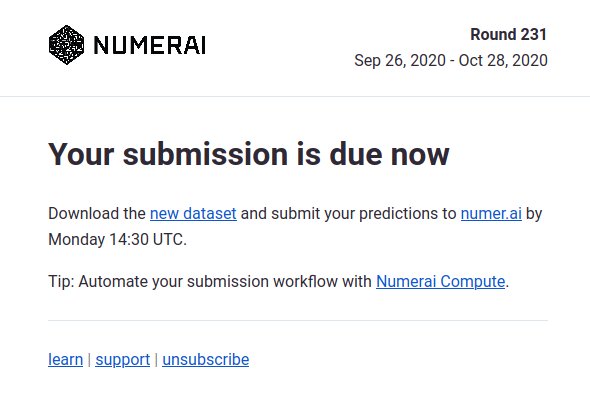
<p>So how did I come across <a href="https://numer.ai/tournament">Numerai</a>, the tournament for would-be quants to predict stock market movement?</p>

<p>It started off with cryptocurrency. Numeraire sits at the very bottom of cryptocurrency stocks running on the <a href="https://www.coinbase.com/price">Coinbase</a> exchange (or index or what have you) in terms of market cap.</p>

<p>So yeah… Numerai. It’s pretty lousy. It’s a hedge fund itself actually (although competitors in the tournament have zero stake in the hedge fund… they just do the grunt work to build it). And since random forests and XGBoost and AutoML have pretty much got machine learning down to a T… er… it’s all going nowhere really.</p>

<p>What most annoys me about Numerai is the size of the dataset. Weekly data must be downloaded and the size of this file unzipped is 3.5GB. That’s do-able but running pandas read_csv() on it has thrown a wobbly to break my machine time and time again. Because I don’t have enough RAM or grunt power. My machine shouldn’t really crash (that’s a quite serious problem I am having with Linux right now, I guess) but Jupyter Notebook is going to crash. I maybe have 12GB RAM in this machine (which is not all that tiny really) but it’s not going to cut it for analysing this Numerai dataset.</p>

<p>The way around it is to use <a href="https://colab.research.google.com/">Google Colab</a> instead of <a href="https://jupyter.org/">Jupyter</a> notebooks. It worked for me. Oh no… ‘Your session crashed after using all available RAM’. At least Google Colab crashes my process but not my whole machine.</p>

<p>I’ve managed but been late with my submissions for the first two weeks of my entry into the Numerai tournament. It’s a start though. But now I need to learn how to use Google Colab. Quite enjoying it though, mostly fussing about at this stage putting datasets and models into different folders (which is not high-end machine learning). And thinking about it with a bit of perspective too. Thinking: Individual competitors competing on a fairly inane question (predicting the movement of market stocks) by seeing who can throw the fastest, biggest computer force at some pretty large datasets… what’s to like?</p>

<p>My point for readers here is just that if your PC has similar modest specs and your exploratory/analytical notebook (or even computer) is crashing when reading the Numerai dataset it’s due to a lack of computer power.</p>

<p>I watched <a href="https://www.netflix.com/gb/title/81254224">The Social Dilemma</a> actually, which was quite good (silly in places). I was pleased to see a major film exploring the alarming impact of profit-motivated algorithms on social networking.</p>

<p>Listening to <a href="https://www.discogs.com/Various-Lazy-Dog/master/232788">Lazy Dog</a>, a 2-CD set of deep house from 2000. Lazy Dog was a club night held in a small basement club in Notting Hill in the late nineties. Deep house, according to Wikipedia, ‘rarely reaches a climax, but lingers on as a comfortable, hypnotic and relaxing pulse, perfect for the small, dimly lit nightclub.’ I’ve worn my ears out with it a bit now but it’s a very nice couple of mixes.</p>]]></content><author><name>hullboy73</name></author><summary type="html"><![CDATA[So how did I come across Numerai, the tournament for would-be quants to predict stock market movement? It started off with cryptocurrency. Numeraire sits at the very bottom of cryptocurrency stocks running on the Coinbase exchange (or index or what have you) in terms of market cap. So yeah… Numerai. It’s pretty lousy. It’s a hedge fund itself actually (although competitors in the tournament have zero stake in the hedge fund… they just do the grunt work to build it). And since random forests and XGBoost and AutoML have pretty much got machine learning down to a T… er… it’s all going nowhere really. What most annoys me about Numerai is the size of the dataset. Weekly data must be downloaded and the size of this file unzipped is 3.5GB. That’s do-able but running pandas read_csv() on it has thrown a wobbly to break my machine time and time again. Because I don’t have enough RAM or grunt power. My machine shouldn’t really crash (that’s a quite serious problem I am having with Linux right now, I guess) but Jupyter Notebook is going to crash. I maybe have 12GB RAM in this machine (which is not all that tiny really) but it’s not going to cut it for analysing this Numerai dataset. The way around it is to use Google Colab instead of Jupyter notebooks. It worked for me. Oh no… ‘Your session crashed after using all available RAM’. At least Google Colab crashes my process but not my whole machine. I’ve managed but been late with my submissions for the first two weeks of my entry into the Numerai tournament. It’s a start though. But now I need to learn how to use Google Colab. Quite enjoying it though, mostly fussing about at this stage putting datasets and models into different folders (which is not high-end machine learning). And thinking about it with a bit of perspective too. Thinking: Individual competitors competing on a fairly inane question (predicting the movement of market stocks) by seeing who can throw the fastest, biggest computer force at some pretty large datasets… what’s to like? My point for readers here is just that if your PC has similar modest specs and your exploratory/analytical notebook (or even computer) is crashing when reading the Numerai dataset it’s due to a lack of computer power. I watched The Social Dilemma actually, which was quite good (silly in places). I was pleased to see a major film exploring the alarming impact of profit-motivated algorithms on social networking. Listening to Lazy Dog, a 2-CD set of deep house from 2000. Lazy Dog was a club night held in a small basement club in Notting Hill in the late nineties. Deep house, according to Wikipedia, ‘rarely reaches a climax, but lingers on as a comfortable, hypnotic and relaxing pulse, perfect for the small, dimly lit nightclub.’ I’ve worn my ears out with it a bit now but it’s a very nice couple of mixes.]]></summary></entry><entry><title type="html">Create a GitHub Pages blog on Ubuntu Linux with local build</title><link href="https://ohdearcrypto.github.io/20kyrsgroove//20kyrsgroove/create-github-pages-blog-on-ubuntu-linux-with-local-build/" rel="alternate" type="text/html" title="Create a GitHub Pages blog on Ubuntu Linux with local build" /><published>2020-09-26T00:00:00+00:00</published><updated>2020-09-26T00:00:00+00:00</updated><id>https://ohdearcrypto.github.io/20kyrsgroove//20kyrsgroove/create-github-pages-blog-on-ubuntu-linux-with-local-build</id><content type="html" xml:base="https://ohdearcrypto.github.io/20kyrsgroove//20kyrsgroove/create-github-pages-blog-on-ubuntu-linux-with-local-build/"><![CDATA[<p><img src="https://user-images.githubusercontent.com/4943215/74586452-bcb15780-4fe7-11ea-94a8-7a9b52bf04b3.jpeg" alt="Laptop" /></p>

<p>Big, big shout out to <a href="https://aryamurali.com/">Arya Murali</a> and her comprehensive guide on Medium to <a href="https://medium.com/20percentwork/creating-your-blog-for-free-using-jekyll-github-pages-dba37272730a">Creating your blog for free using Jekyll + Github pages</a>. That’s the definitive and really spot on guide to how to do this.</p>

<p>I could attempt to rewrite the whole of that article in my own words and I’ve had a go but it’s so well written and clear that I’ll just direct you to <a href="https://medium.com/20percentwork/creating-your-blog-for-free-using-jekyll-github-pages-dba37272730a">that tutorial</a>.</p>

<p><a href="https://pages.github.com/">The GitHub Pages welcome page</a> provides an easier method to setting up a blog on GitHub Pages but it won’t enable you to build your website locally on your machine and push the changes from there. <a href="https://medium.com/20percentwork/creating-your-blog-for-free-using-jekyll-github-pages-dba37272730a">This tutorial</a> is a thorough guide to how to do that.</p>

<p>I’m running on a Ubuntu 18.04 Linux platform so in terms of installing packages and dependencies start with this at the command line.</p>

<figure class="highlight"><pre><code class="language-bash" data-lang="bash"><span class="nv">$ </span><span class="nb">sudo </span>apt-get <span class="nb">install </span>ruby  
<span class="nv">$ </span>gem <span class="nb">install </span>jekyll bundler</code></pre></figure>

<p>Everything else <a href="https://medium.com/20percentwork/creating-your-blog-for-free-using-jekyll-github-pages-dba37272730a">here</a> should be straight-forward enough. It is a kind of complicated process. One of the confusing things is you build offline <em>before</em> creating a repository on GitHub Pages. Another issue that’s often mentioned in similar guides (I’ve read quite a lot) is checking out to the gh-pages branch. I don’t understand any of that but it’s all set out in <a href="https://medium.com/20percentwork/creating-your-blog-for-free-using-jekyll-github-pages-dba37272730a">the guide</a>.</p>

<!-- From the browser or command line go to [http://127.0.0.1:4000](http://127.0.0.1:4000) and check out your new blog.  

These are the essential instructions that are frustratingly absent from a lot of guides but were made explicit in [the marvellous tutorial/guide mentioned above](https://medium.com/20percentwork/creating-your-blog-for-free-using-jekyll-github-pages-dba37272730a). I'm just passing on some useful information. We're kind of only halfway there because the blog is not yet set up on GitHub Pages. Again this is confusing because the trick is to set up create the repository offline (as we just did with the jekyll serve command) before creating the repository on GitHub Pages. [Arya's tutorial](https://medium.com/20percentwork/creating-your-blog-for-free-using-jekyll-github-pages-dba37272730a) takes you carefully step-by-step through that process.  

So on GitHub Pages you create a new repository. This is achieved via the plus button at the top right of the screen. You enter your_blog_name exactly as you set it up with jekyll earlier in the Repository name box. Don't initialize the repository with a README. Just hit the Create repository green button and stop right there. We're going to 'push an existing repository from the command line'. -->

<p>So I’m not exactly new to blogging or using GitHub but I do get a bit tied up in knots when trying to work my way through this stuff. Jekyll has a decent and not too long <a href="https://jekyllrb.com/docs/step-by-step/01-setup/">Step by Step Tutorial</a> which I’ll have to read again. I jump into these things and only really understand what’s happening after I’ve haphazardly come across and typed in <a href="https://medium.com/20percentwork/creating-your-blog-for-free-using-jekyll-github-pages-dba37272730a">the correct instructions</a> I needed to get it to work. That’s pretty much my amateur way in. The GitHub Pages docs were maddening. <a href="https://jekyllrb.com/docs/step-by-step/02-liquid/">Liquid templating</a> looks tricky. It’s all coded in Ruby this static website stuff, Jekyll and so forth. I remember that fantastic comic guide to Ruby - Why’s comic guide or something? What was that called? <a href="https://poignant.guide/">Why’s (Poignant) Guide to Ruby</a>. There are static site generators for Python, such as <a href="https://blog.getpelican.com/">Pelican</a> and now I understand a bit more how it works I could have a look at that maybe or perhaps just stick with Ruby and Jekyll and a just about working website.</p>

<p>OK, <a href="https://stackoverflow.com/questions/35077507/how-to-right-align-and-justify-align-in-markdown">how do I justify paragraphs?</a> This is gonna’ be harder than I thought…</p>]]></content><author><name>hullboy73</name></author><summary type="html"><![CDATA[Big, big shout out to Arya Murali and her comprehensive guide on Medium to Creating your blog for free using Jekyll + Github pages. That’s the definitive and really spot on guide to how to do this. I could attempt to rewrite the whole of that article in my own words and I’ve had a go but it’s so well written and clear that I’ll just direct you to that tutorial. The GitHub Pages welcome page provides an easier method to setting up a blog on GitHub Pages but it won’t enable you to build your website locally on your machine and push the changes from there. This tutorial is a thorough guide to how to do that. I’m running on a Ubuntu 18.04 Linux platform so in terms of installing packages and dependencies start with this at the command line. $ sudo apt-get install ruby $ gem install jekyll bundler Everything else here should be straight-forward enough. It is a kind of complicated process. One of the confusing things is you build offline before creating a repository on GitHub Pages. Another issue that’s often mentioned in similar guides (I’ve read quite a lot) is checking out to the gh-pages branch. I don’t understand any of that but it’s all set out in the guide. So I’m not exactly new to blogging or using GitHub but I do get a bit tied up in knots when trying to work my way through this stuff. Jekyll has a decent and not too long Step by Step Tutorial which I’ll have to read again. I jump into these things and only really understand what’s happening after I’ve haphazardly come across and typed in the correct instructions I needed to get it to work. That’s pretty much my amateur way in. The GitHub Pages docs were maddening. Liquid templating looks tricky. It’s all coded in Ruby this static website stuff, Jekyll and so forth. I remember that fantastic comic guide to Ruby - Why’s comic guide or something? What was that called? Why’s (Poignant) Guide to Ruby. There are static site generators for Python, such as Pelican and now I understand a bit more how it works I could have a look at that maybe or perhaps just stick with Ruby and Jekyll and a just about working website. OK, how do I justify paragraphs? This is gonna’ be harder than I thought…]]></summary></entry><entry><title type="html">Welcome to 20,000 Years of Dance Music</title><link href="https://ohdearcrypto.github.io/20kyrsgroove//20kyrsgroove/welcome-to-20,000-years-of-dance-music/" rel="alternate" type="text/html" title="Welcome to 20,000 Years of Dance Music" /><published>2020-09-25T00:00:00+00:00</published><updated>2020-09-25T00:00:00+00:00</updated><id>https://ohdearcrypto.github.io/20kyrsgroove//20kyrsgroove/welcome-to-20,000-years-of-dance-music</id><content type="html" xml:base="https://ohdearcrypto.github.io/20kyrsgroove//20kyrsgroove/welcome-to-20,000-years-of-dance-music/"><![CDATA[<p>Yay, up and running!</p>

<p>This is number one in “the only chart that counts”…</p>

<p><img src="https://ohdearcrypto.github.io/20kyrsgroove//images/mood.jpg" style="display: block; margin: auto;" /></p>]]></content><author><name>hullboy73</name></author><summary type="html"><![CDATA[Yay, up and running! This is number one in “the only chart that counts”…]]></summary></entry></feed>